Coffee, Car, Stress, Phone: Breaking the Puff Habit Loop
Most of your puffs aren't decisions — they're cues firing on schedule. How to map your habit loops and build replacement rituals that actually hold.
Quick answer
Most puffs are not decisions — they are a cue firing, a routine running and a reward landing. The reward is usually the pause rather than the nicotine. Removing the routine while leaving the cue and reward in place collapses within days, so swap in a replacement that is immediate, physical and roughly the same length.
Try this: without checking anything, say how many times you smoked or vaped yesterday. Then say what was happening immediately before each one.
Most people can’t answer either question, and that’s the whole point. If your puffs were decisions, you’d remember making them. They’re not. They’re a cue firing, a routine running, and a reward landing — a loop that stopped requiring your attention a long time ago.
Which is good news, in a way. You’re not fighting a craving thirty times a day. You’re fighting maybe five or six loops, each of them running several times.
The loop, and the part you can actually change
Every habit has three pieces:
Cue — the trigger. Almost always one of five things: a time of day, a location, a preceding action, an emotional state, or the presence of certain people. The kettle boiling. Pulling the car door shut. The end of a meeting. Being annoyed.
Routine — the behaviour. Hand to pocket, device to mouth, inhale.
Reward — what the loop delivers. And this is the piece people misread, because the reward is usually not nicotine. It’s the pause. The excuse to stand outside. The five minutes where nobody talks to you. The thing to do with your hands when a conversation goes quiet.
Here’s why this matters: you cannot remove a routine and leave the cue and the reward in place. The cue will keep firing — you can’t stop your own kettle from boiling — and the brain will keep expecting a reward. An empty slot is an unstable structure, and it collapses back into the old routine within days.
The move that works is to keep the cue, keep the reward, and swap the routine for something that delivers something close enough.
Map yours first — three days, no changes
Before changing anything, find out what your loops actually are. For three days, log each puff with two words: where and what just happened. That’s it. Don’t try to reduce yet; you’re collecting a baseline, and trying to be good at the same time contaminates the data.
At the end of three days, group them. Almost everyone finds the same thing: sixty to eighty percent of their puffs fall into four or five recurring situations, and the rest is scatter.
Those four or five are your real targets. Everything else follows once they’re handled.
The five loops nearly everyone has
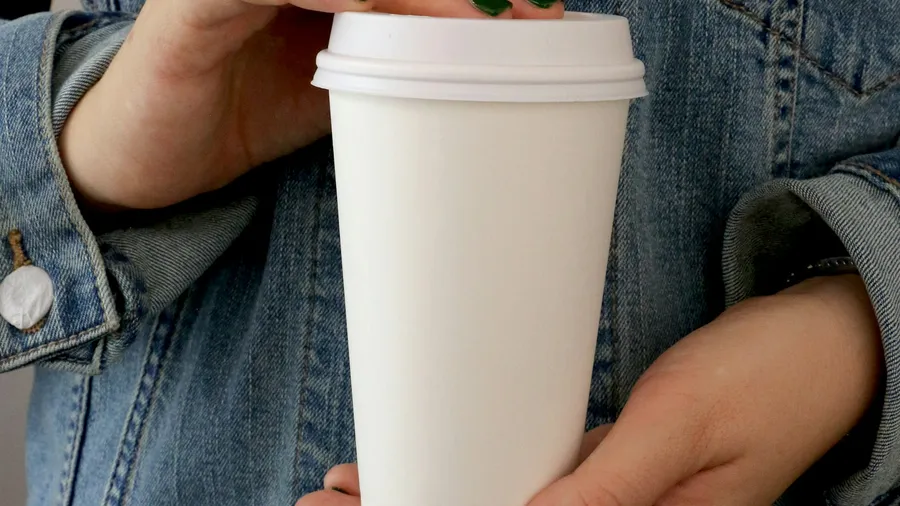
Coffee. The most tightly welded pairing in the whole habit, because caffeine and nicotine were learned together and the brain files them as one event. Two options: break the pairing physically (drink your coffee somewhere you’ve never smoked — a different chair, a different room, standing at the window) or interrupt the sequence (finish the cup completely before you get up, so the trigger has already passed). Moving one chair is far more effective than it sounds.
The car. A sealed box, boredom, and one free hand — a near-perfect habit environment. The car is also the easiest to fix, because it’s yours and you control everything in it. Clean it thoroughly once, empty the ashtray, put something in the cupholder that goes in your mouth (gum, seeds, cold water), and start something you actually want to listen to before you set off. Give the hand a job and the mouth a job.
Stress and the argument. The hardest one, because the reward here is real: the walk away, the ninety seconds of not being in the room. The replacement has to deliver the same escape. Leave the room anyway. Walk the same route to the same spot. Stand there for the same three minutes. Breathe on a slow count — in four, out six — and come back. You keep the pause, which is what you actually wanted, and drop the part that costs money.
The phone. Increasingly the biggest one for vapers, and the sneakiest, because the cue is empty time and empty time is now filled by a device that lives in the same pocket. Puff and scroll became one gesture. If you can separate them for a fortnight — phone in one pocket, nothing in the other, and no vaping while looking at a screen — you’ll break a surprising number of daily puffs, because a lot of them were the phone’s, not yours.
After eating. Digestion, a finished task, a natural pause. Replace it with a fixed two-minute action that also signals “meal over”: clear the plates, brush your teeth, step outside and walk to the end of the street. Toothbrushing is unreasonably effective here, partly as a ritual and partly because the taste ruins the next ten minutes for smoking.
What makes a replacement stick
Most replacement rituals fail for predictable reasons. A good one is:
Immediate. It has to start within seconds of the cue. If there’s a gap, the old routine fills it — it’s faster, and it’s had years of practice.
Physical. Something your body does: standing, walking, holding, chewing, breathing, cold water. “Think about why I’m quitting” is not a replacement ritual; it’s an invitation to negotiate, and you will lose that negotiation at 4 p.m. on a bad day.
Roughly the same length. A cigarette is about five minutes. A replacement that takes ten seconds leaves four and a half minutes of unfilled expectation.
Specific in advance. Written down, attached to one cue, decided while calm. “I’ll do something else” is not a plan. “After lunch I brush my teeth and walk to the postbox” is.
Singular. One loop at a time. Pick your most frequent one, run the replacement for a full week until it stops requiring thought, then take the next. Trying to rewire five loops on the same Monday is how people end up back at their baseline by Friday.
Change the environment, not just the intention
Habits are far more environmental than people believe, and environment is much easier to edit than willpower.
- Move the ashtray, the lighter, the charger, the spare pods. Not hidden — gone. Every extra step between cue and routine buys you seconds, and seconds are where the decision fits.
- Clean the places that smell of it: car, jacket, balcony, the specific chair. The smell is itself a cue, and it’s firing at you all day.
- Change one physical detail of each trigger scene. Different mug, different chair, different route out of the building, different pocket for your phone. You’re trying to make the scene not quite match the memory.
- Tell the two or three people who habitually offer. One sentence — “don’t offer me one for a while, even if I ask” — removes a whole category of cue.
Expect a couple of loops to hold out
Two or three will resist everything: the one with your oldest friend, the one at the end of a drinking night, the one at 1 a.m. when something has gone genuinely wrong. Don’t take their persistence as evidence the approach failed. Handle the ordinary loops first, get your daily count down, and come back to the stubborn ones with fewer battles running at once.
And keep counting while you do it. Making an automatic behaviour visible interrupts it on its own — a puff you have to log is a puff you noticed, and a noticed puff is briefly a decision again.
That’s the part Puff Counter is really for: one tap from your phone, watch or home screen so the counting costs nothing, and a weekly limit that steps down from your real average as the loops come apart.
Start with three days and two words. The pattern will be more obvious than you expect.
Frequently asked questions
What is a habit loop and how does it apply to smoking?
A habit loop has three parts: a cue (a time of day, a place, a preceding action, an emotion or a person), a routine (hand to pocket, device to mouth, inhale) and a reward. For smoking the reward is usually the pause, the excuse to step outside, or something to do with your hands — not the nicotine itself.
How do I find my smoking or vaping triggers?
Log every puff for three days with two words: where you were, and what had just happened. Do not try to reduce at the same time, because that contaminates the baseline. Most people find that sixty to eighty per cent of their puffs fall into just four or five recurring situations.
What are the most common smoking and vaping triggers?
Coffee, the car, stress or an argument, the phone during empty time, and the end of a meal. Each needs its own fix: break the coffee pairing physically, give hands and mouth a job in the car, keep the walk-away but drop the cigarette, and stop pairing the phone with the device.
What makes a replacement habit actually stick?
It has to start within seconds of the cue, be physical rather than a thought, last roughly as long as a cigarette did, be decided in advance and attached to one specific cue, and be introduced one loop at a time. Trying to rewire five loops on the same Monday usually fails by Friday.